Ai and AI
From Ai's art to AI, 由艾未未想到AI (中英对照,中文在后半部)

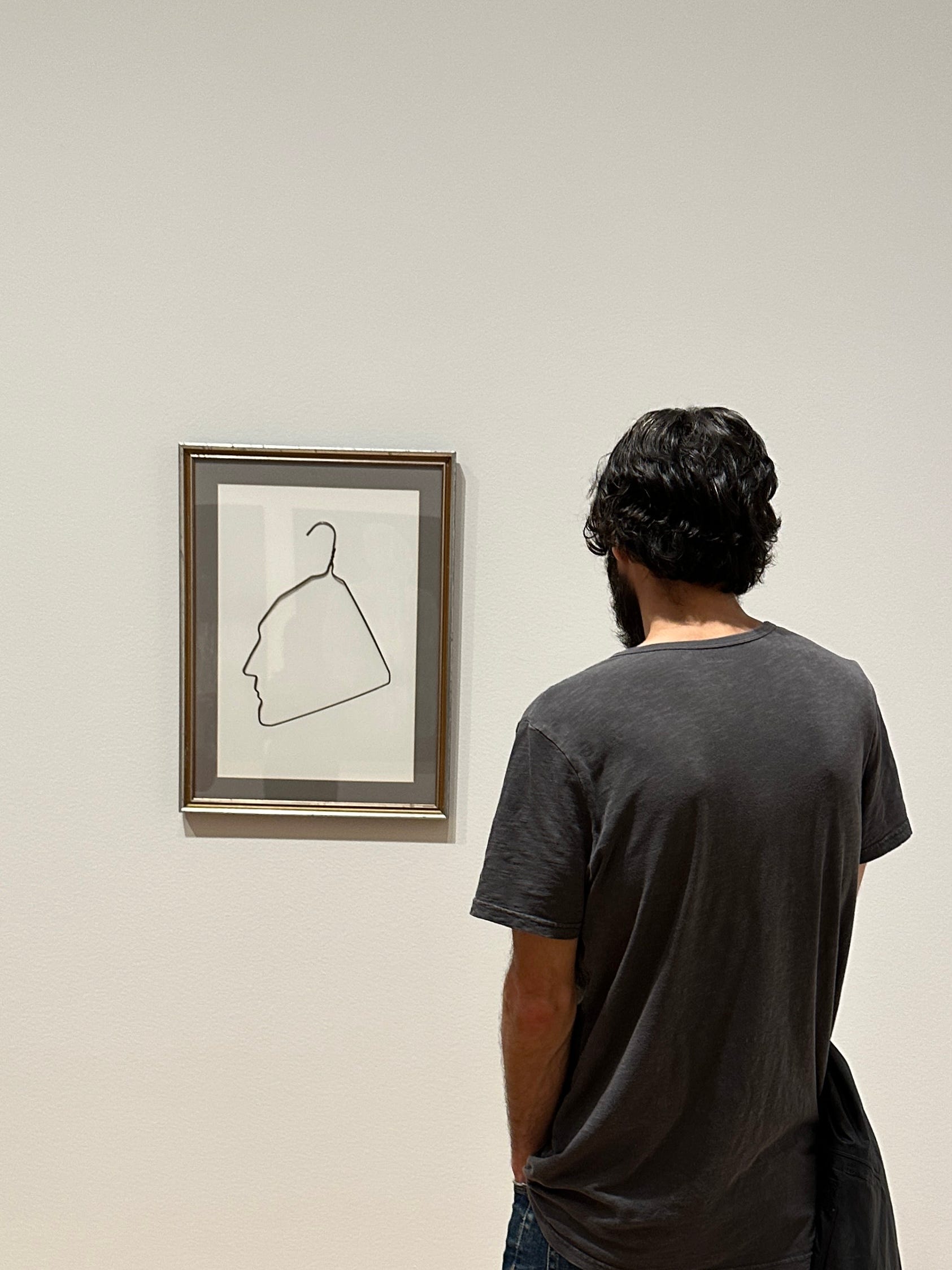
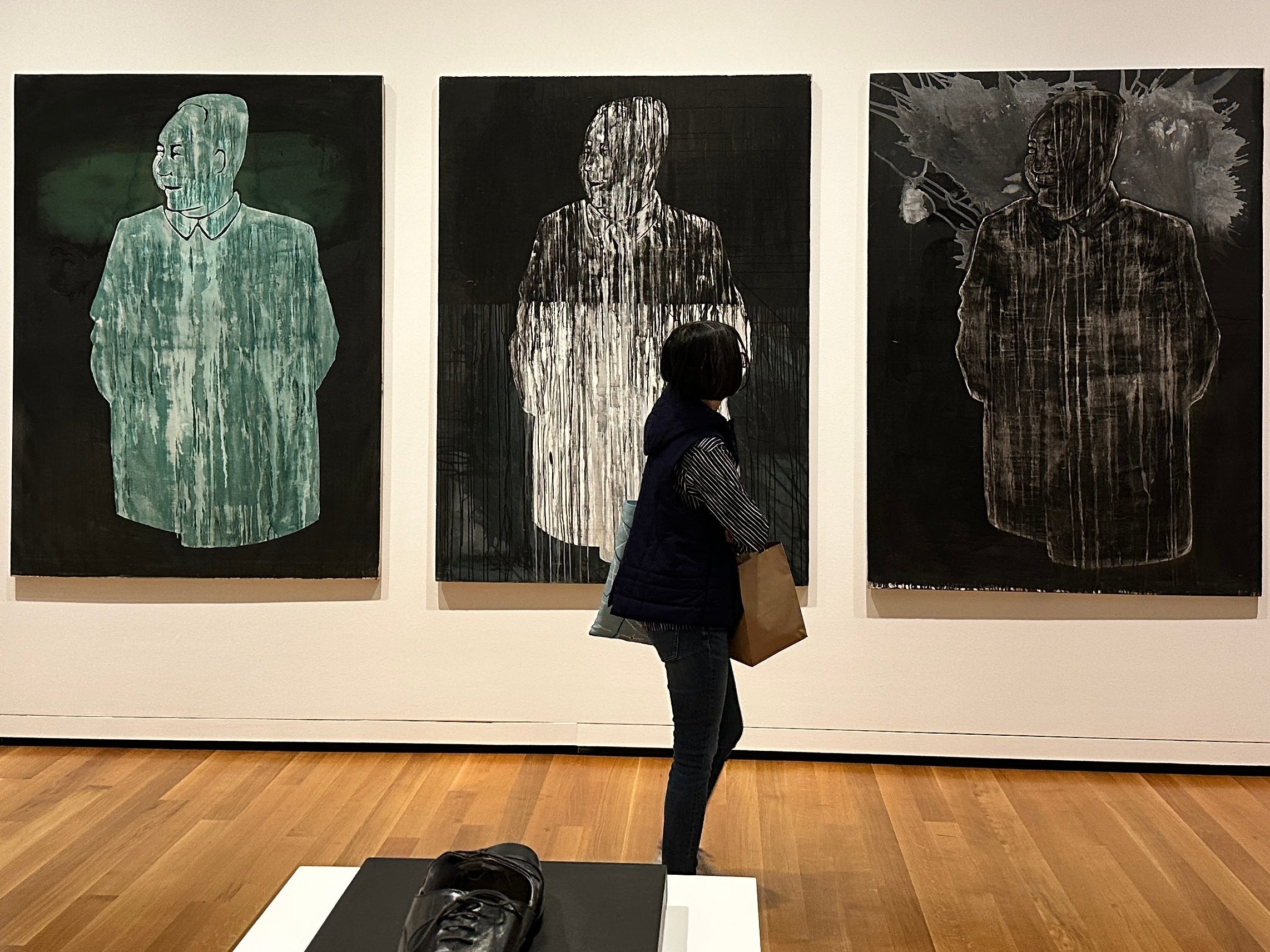
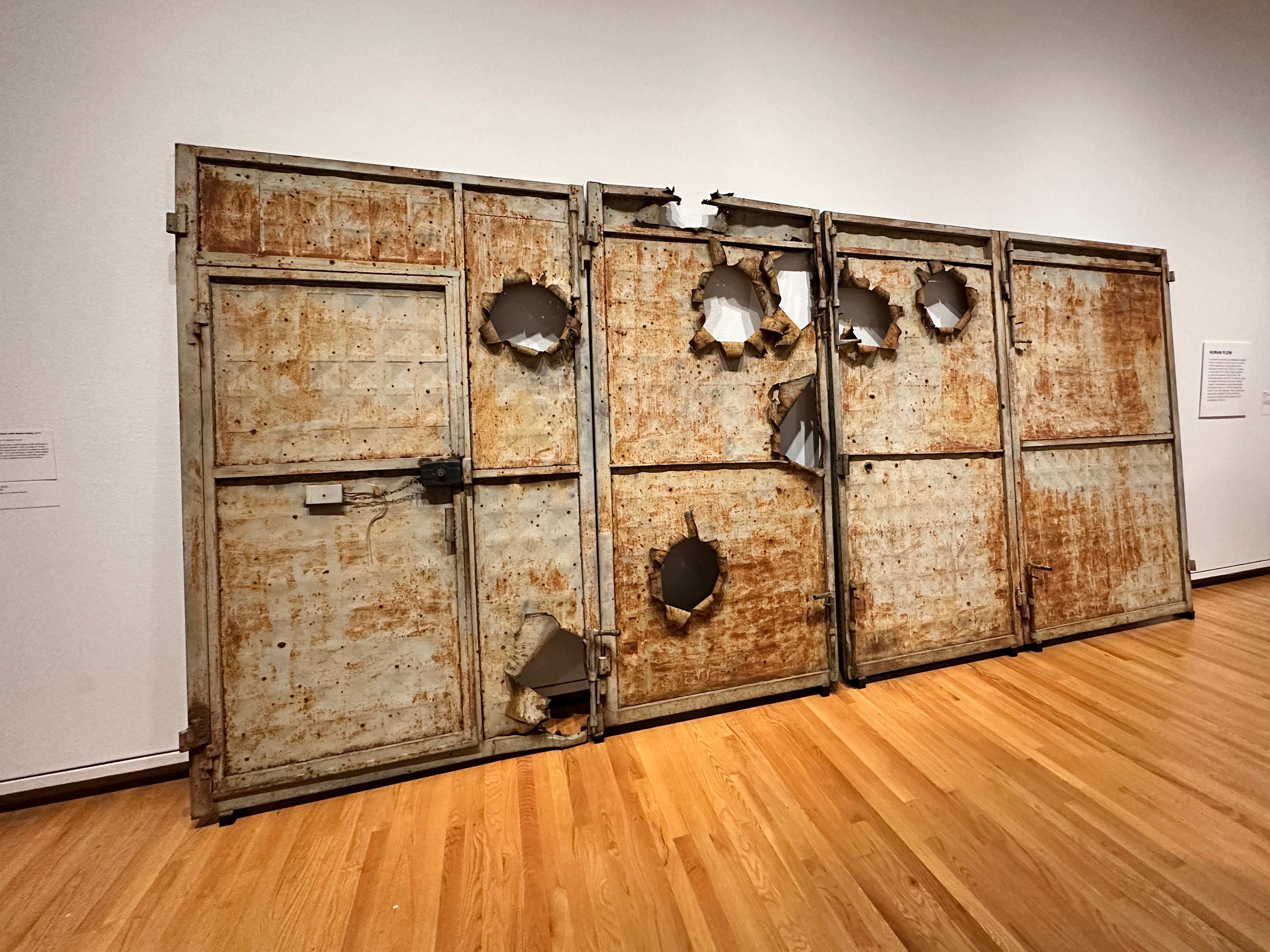
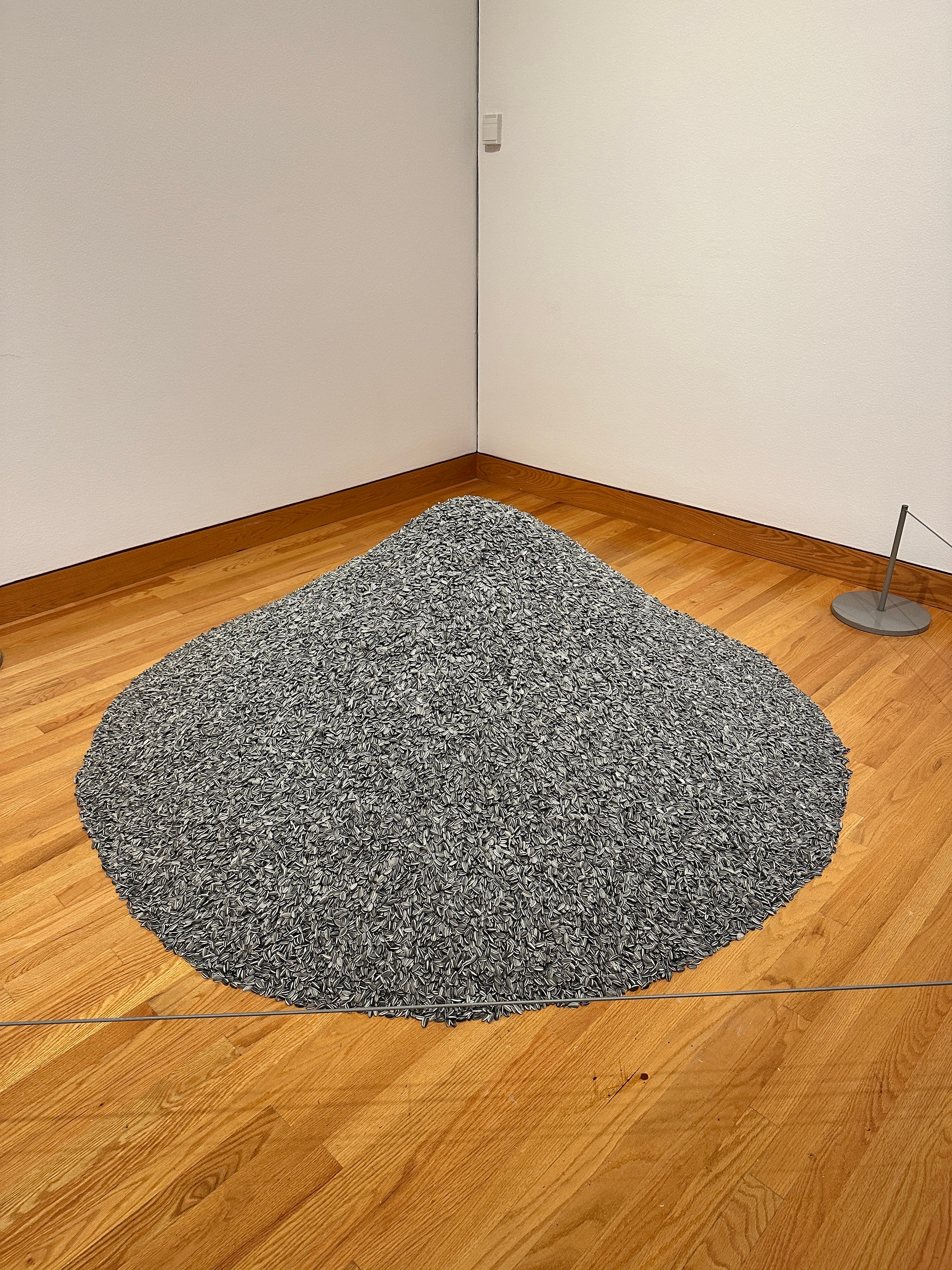
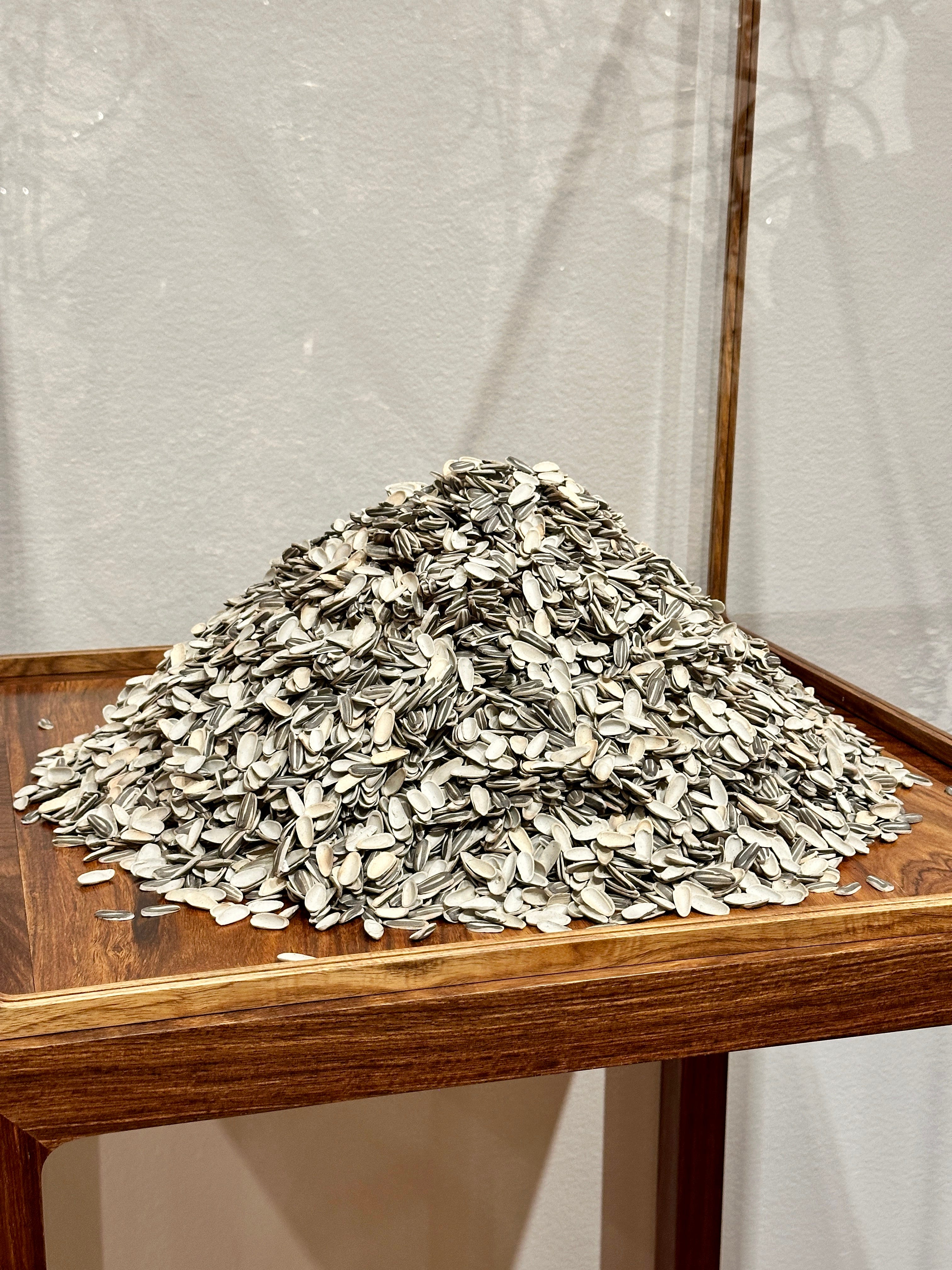
I used to think Ai Weiwei’s art was ugly, even disturbing. It felt like he was acting crazy just to get attention, and I didn’t understand it. In early March, my son told me that the largest Ai Weiwei exhibition in the U.S. was coming to the Seattle Art Museum (SAM) from March 12 to September 7, 2025. For the first time in its 90-year history, SAM is exhibiting one artist’s work at the same time in all three of its locations—Downtown, the Asian Art Museum, and the Olympic Sculpture Park.
So yesterday, I decided to go with a couple of friends. I told myself to keep an open mind and just try to learn something. And I did—much more than I expected.
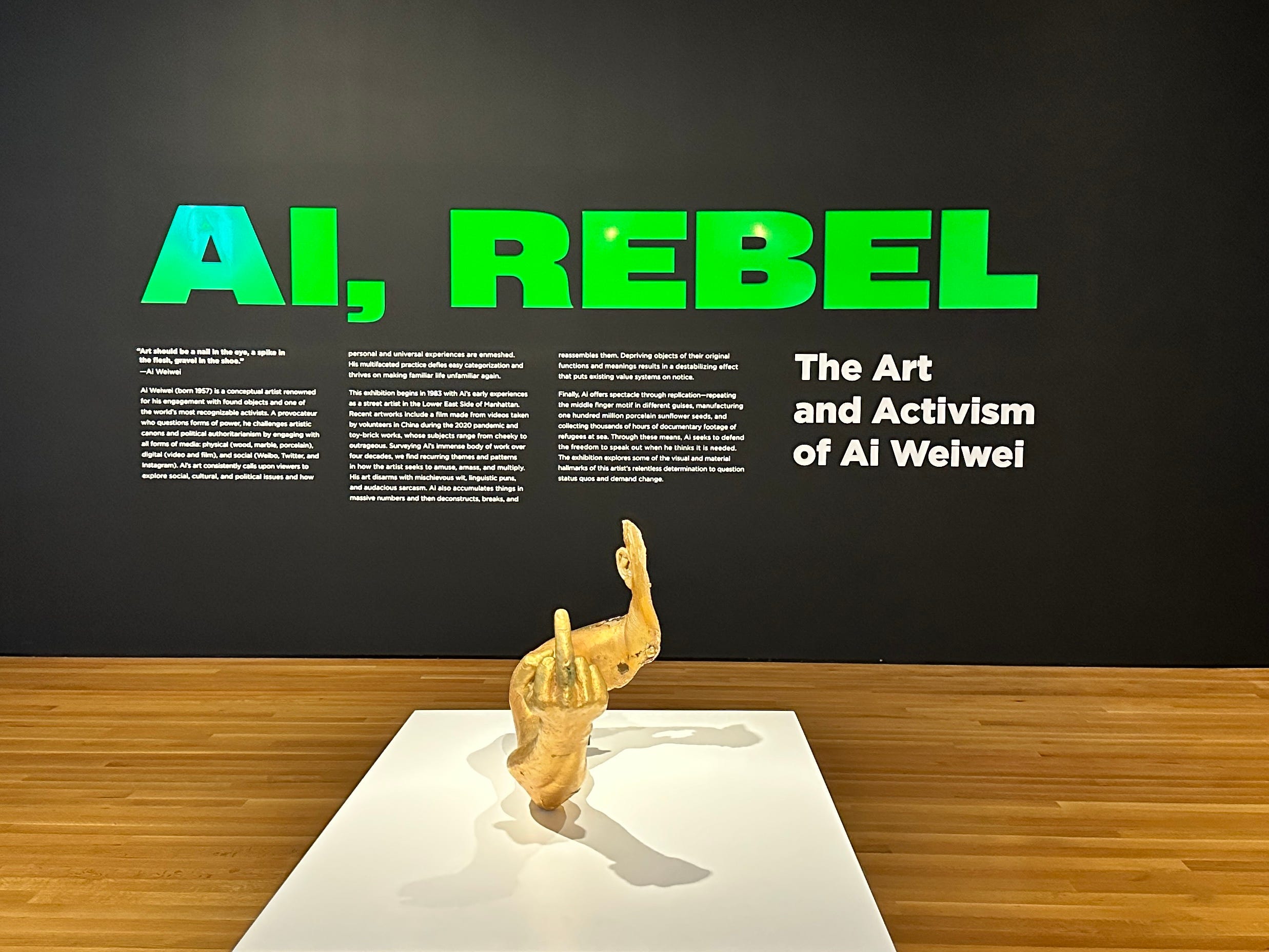
Who Are Ai Weiwei and Ai Qing?
Ai Weiwei was born in 1957. His father, Ai Qing (1910–1996), was a celebrated Chinese poet. Ironically, although Ai Qing was born into a wealthy family, he was raised by a poor woman because a fortune teller said he would bring misfortune. In a way, that prediction came true.
Ai Qing studied painting in Paris from 1929 to 1932, but when he returned to China, he was jailed by the Kuomintang for three years because of his political beliefs. After his release, he joined the Communist Party. Yet, during the Anti-Rightist Movement in 1957, he was labeled a “rightist” and exiled with his family to labor camps for 16 years.
Ai Weiwei grew up under those harsh conditions. During the Cultural Revolution, his family lived in dugouts, facing constant humiliation and poverty. He returned to Beijing in 1976, studied art, and moved to New York in 1981. He came back to China in 1993 to care for his sick father. His upbringing, shaped by injustice and political persecution, deeply influenced his lifelong commitment to questioning authority and speaking truth through art.
As a result, he lived under government surveillance for years, was jailed for 81 days in 2011 under the charge of tax evasion, and eventually left China in 2015. He now lives in Portugal.
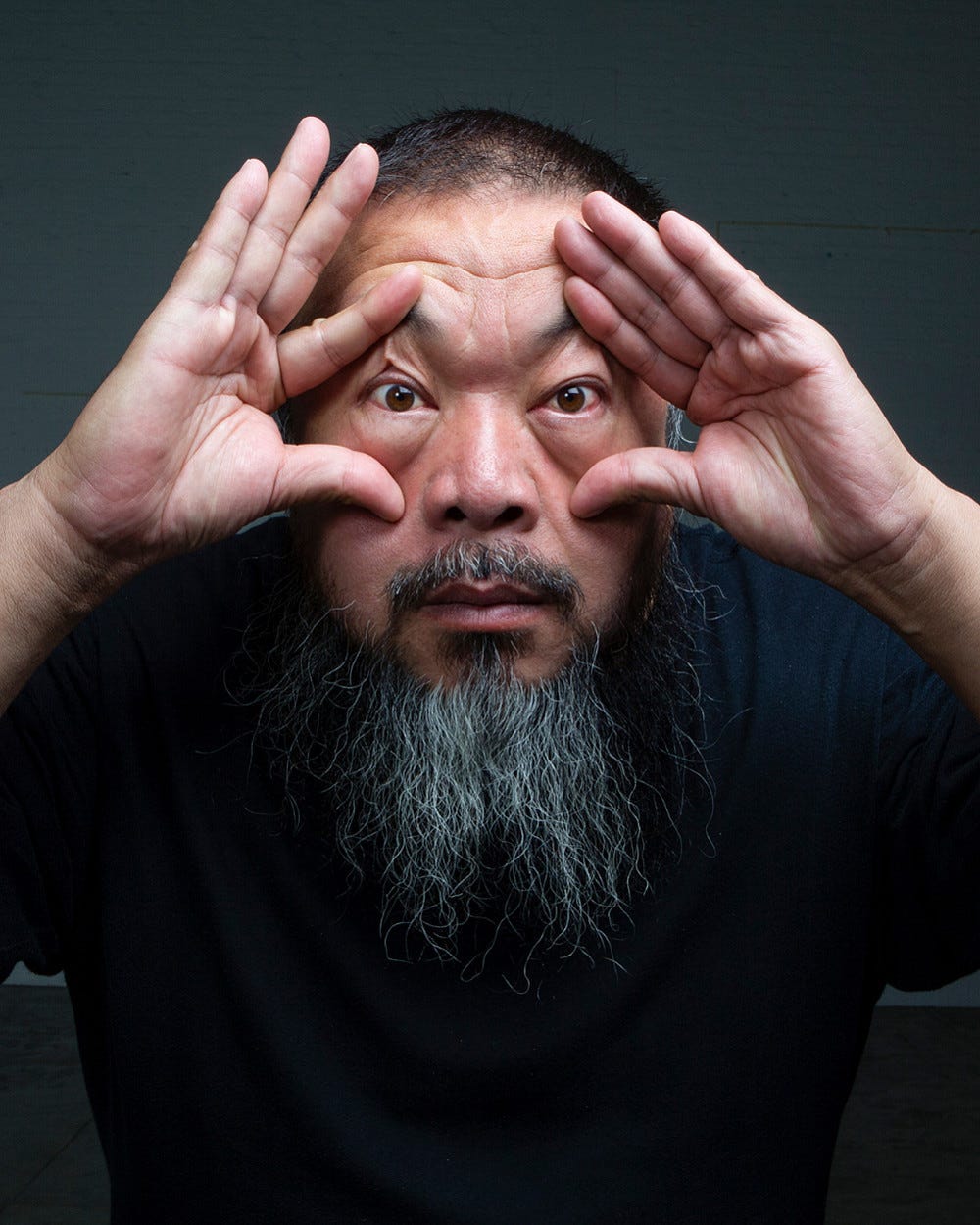
A Rebel with a Purpose
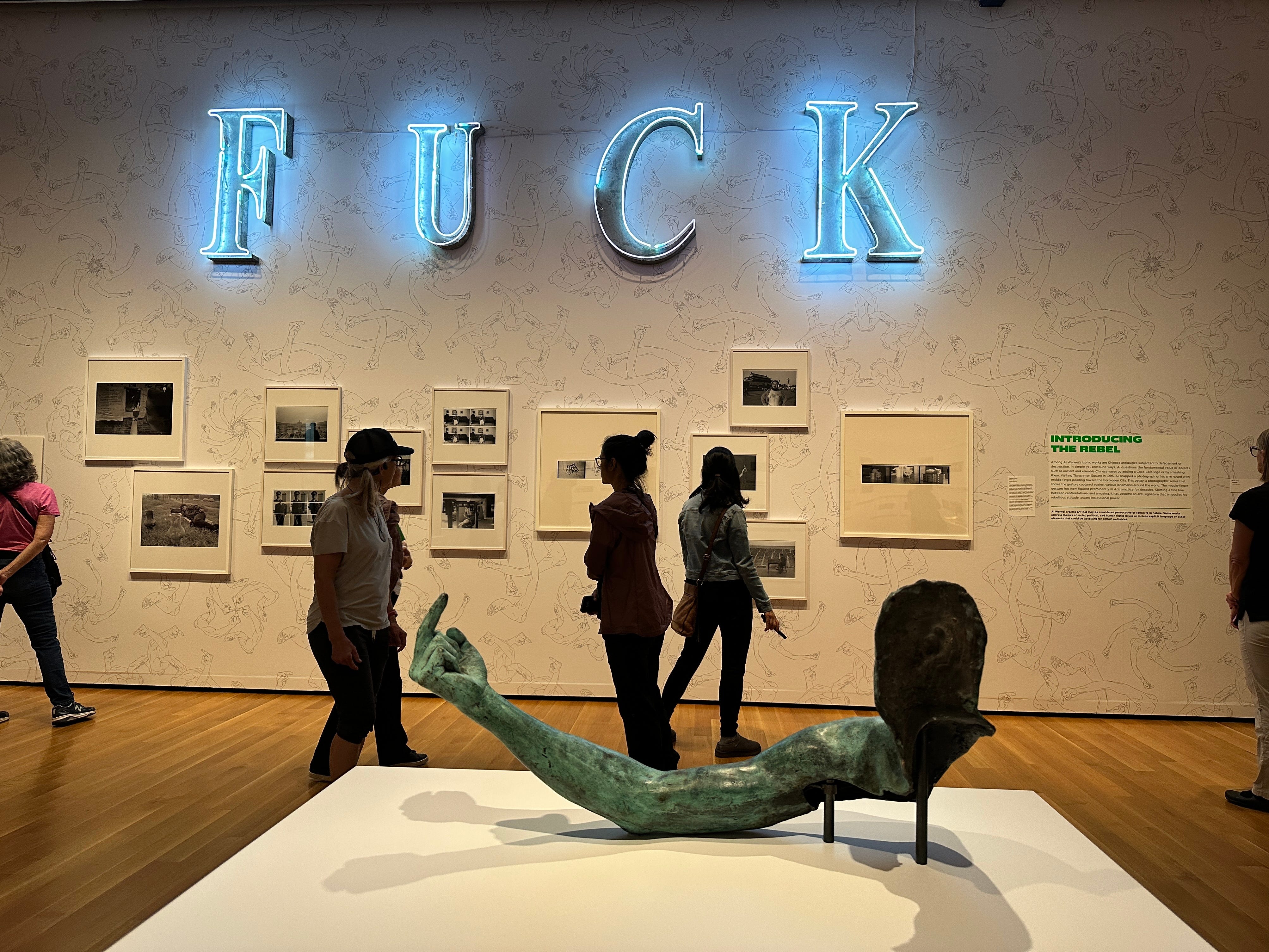
Ai Weiwei is often called a rebel—someone who opposes authority and defies the norm. But rebellion, in his case, isn’t about chaos or destruction. It’s about making us ask uncomfortable questions. Through his art, he invites us to look at the world—and ourselves—differently.
The Usefulness of Uselessness
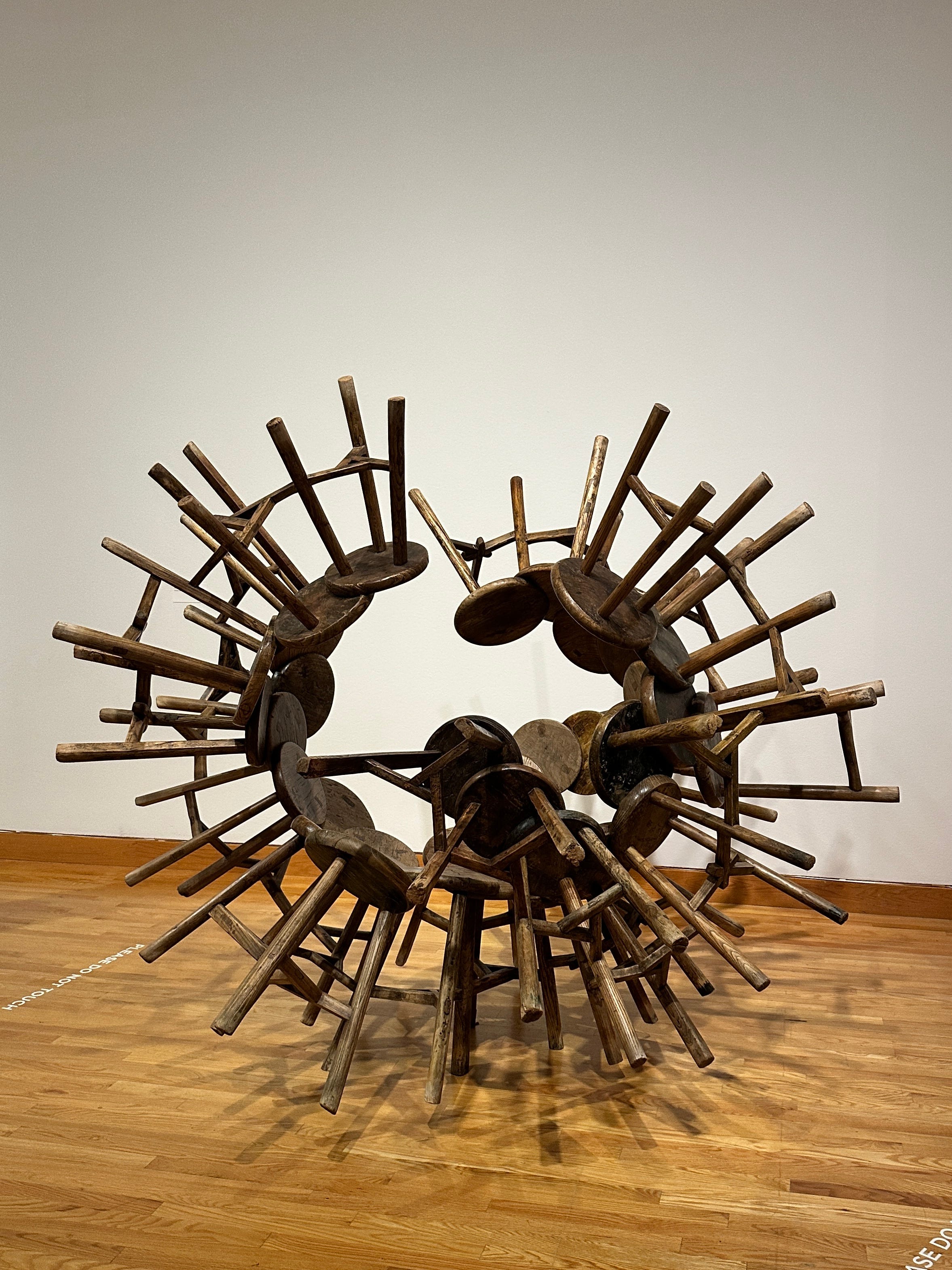
One of the Chinese philosophical ideas that runs through Ai’s work comes from the Daoist thinker Zhuangzi: “无用之为用” — The usefulness of being useless.
Last weekend, a friend brought some beautifully embroidered silk table runners to our tea gathering. She said they cost hundreds of dollars, but when I asked if she used them, she replied, “No, I just like looking at them.” I’ve always valued usefulness in terms of function, productivity, or personal growth—but this made me pause.
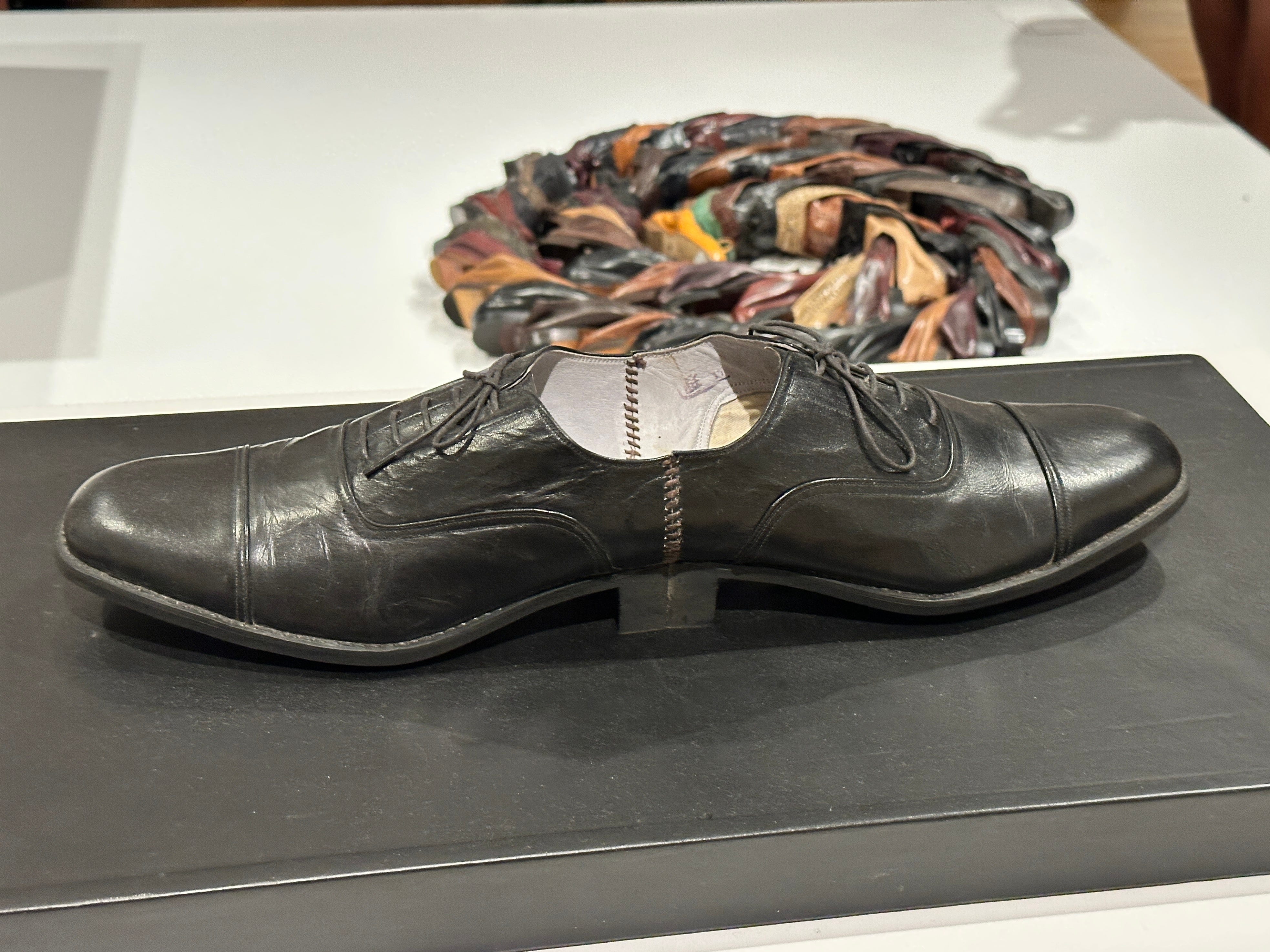
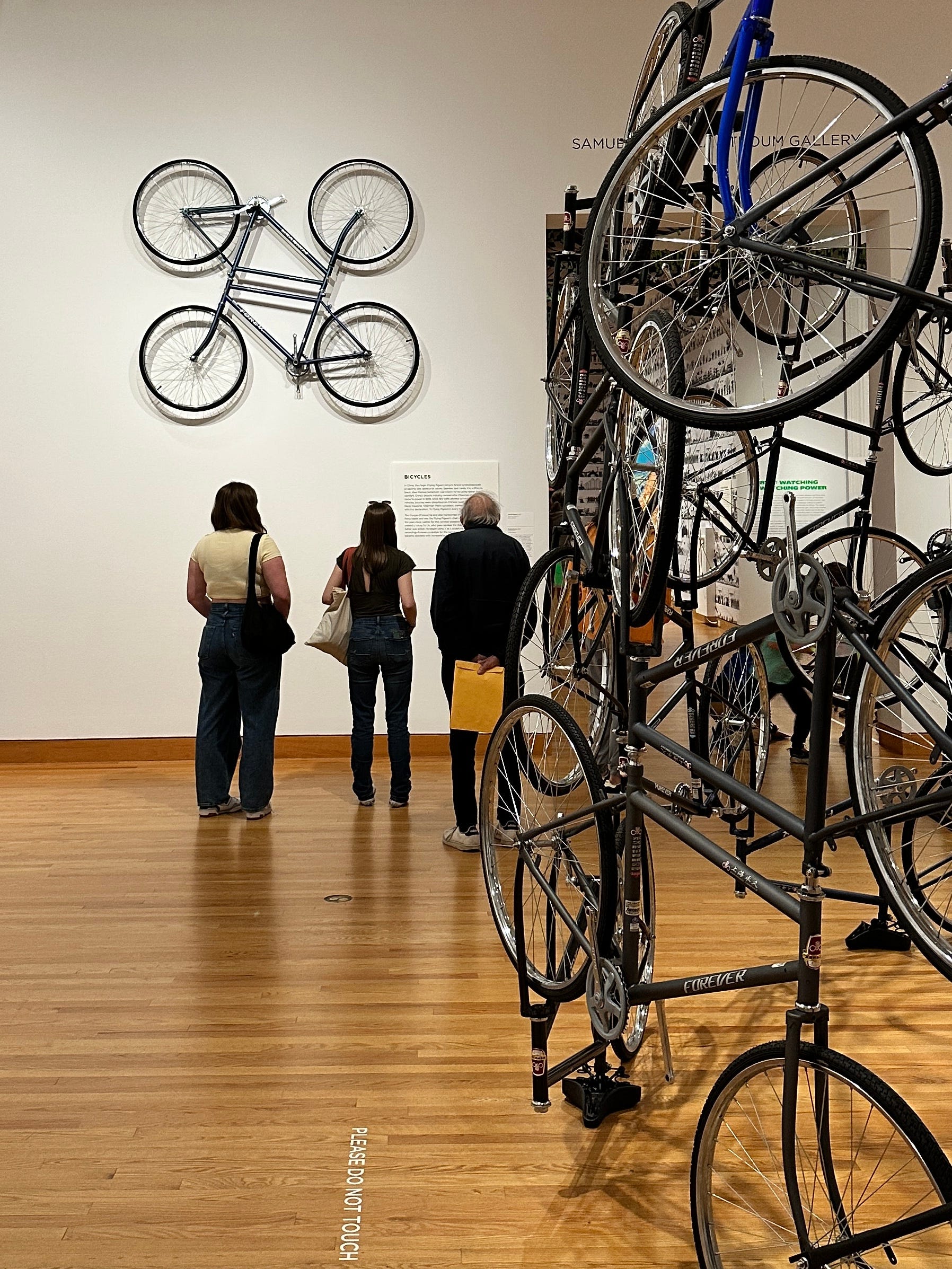
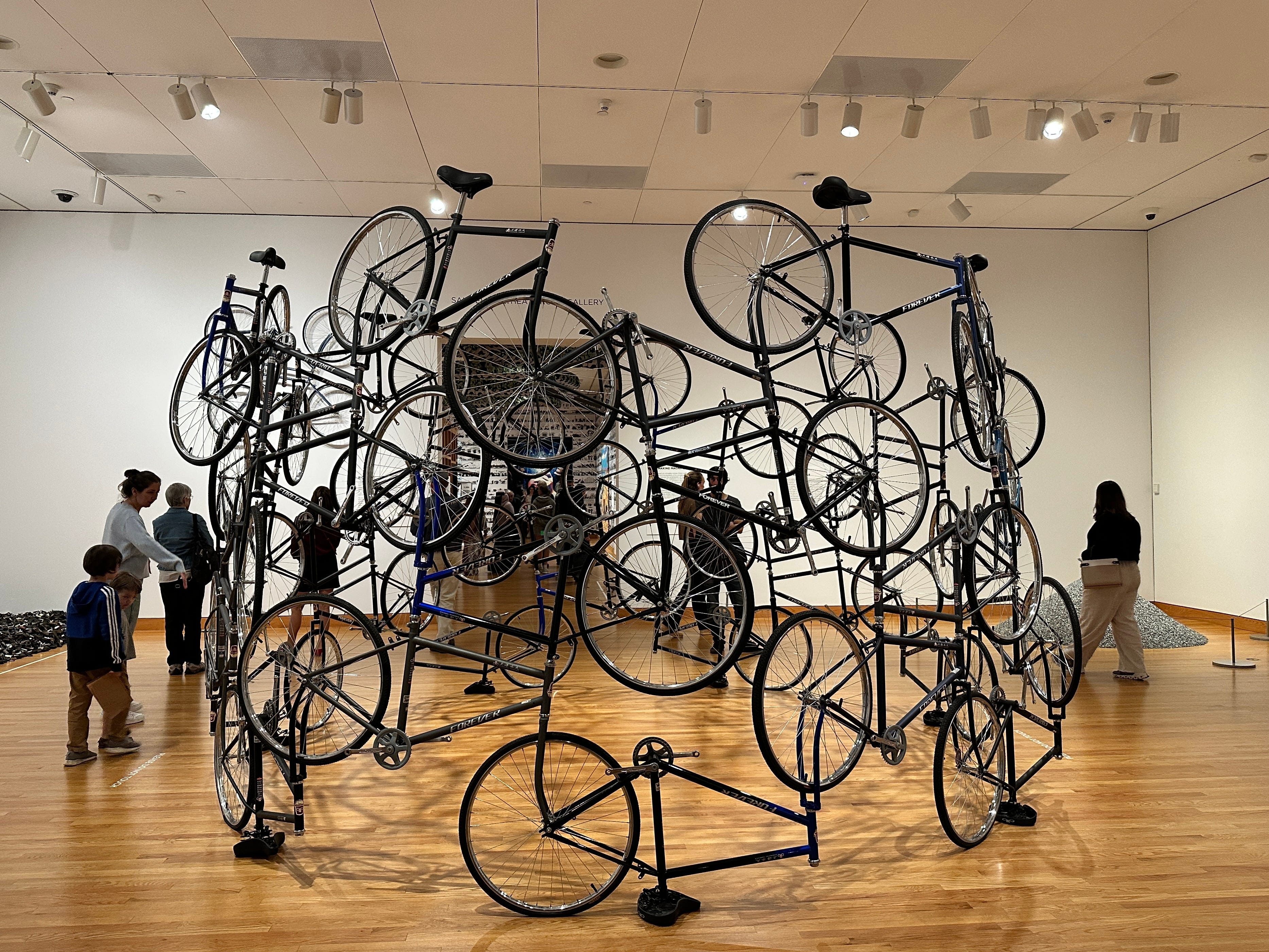
Ai Weiwei’s sculptures made from old Chinese stools or Forever-brand bicycles, stripping these objects of their original utility. You can’t sit on them or ride them anymore. But by assembling them in new, unexpected ways, he gives them new meaning. I can’t help to ask myself: What is usefulness? What is waste?
Authentic vs. Fake
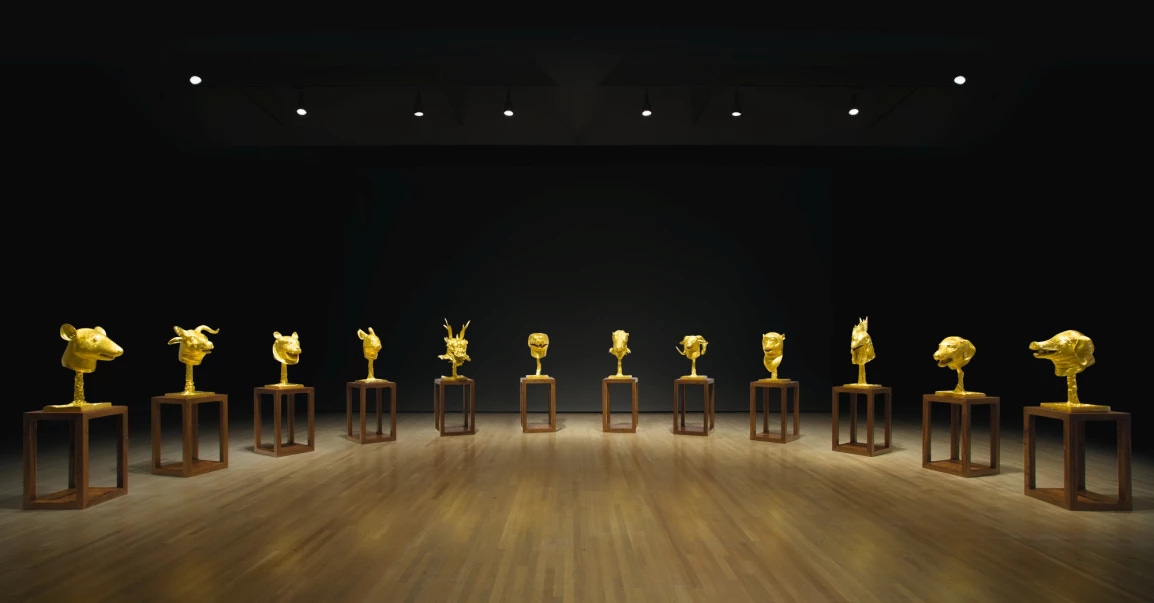
Ai Weiwei’s Circle of Animals/Zodiac Heads challenged my understanding of authenticity. The original heads once adorned a Qing Dynasty fountain in Summer Palace in Beijing, but they were designed by a European Jesuit and cast in bronze by the French. China now treats them as national treasures.
Ai remade the whole set—both honoring the originals and questioning what makes something “authentic.” Is it age? Origin? Memory?
It reminded me of a moment with my son during our recent trip to China. He loves shengjian bao, and we tried XiaoYang Shangjian and Shazi Shengjian during our visit. I said, “This is authentic!” while we are eating. He looked at me and asked, “What do you mean by authentic?” I didn’t have an answer. To him, every version—from China to the U.S., even my homemade one—was just delicious. Maybe authenticity is a story we tell ourselves.
Rethinking Value
Ai Weiwei’s art also made me question how I define value.
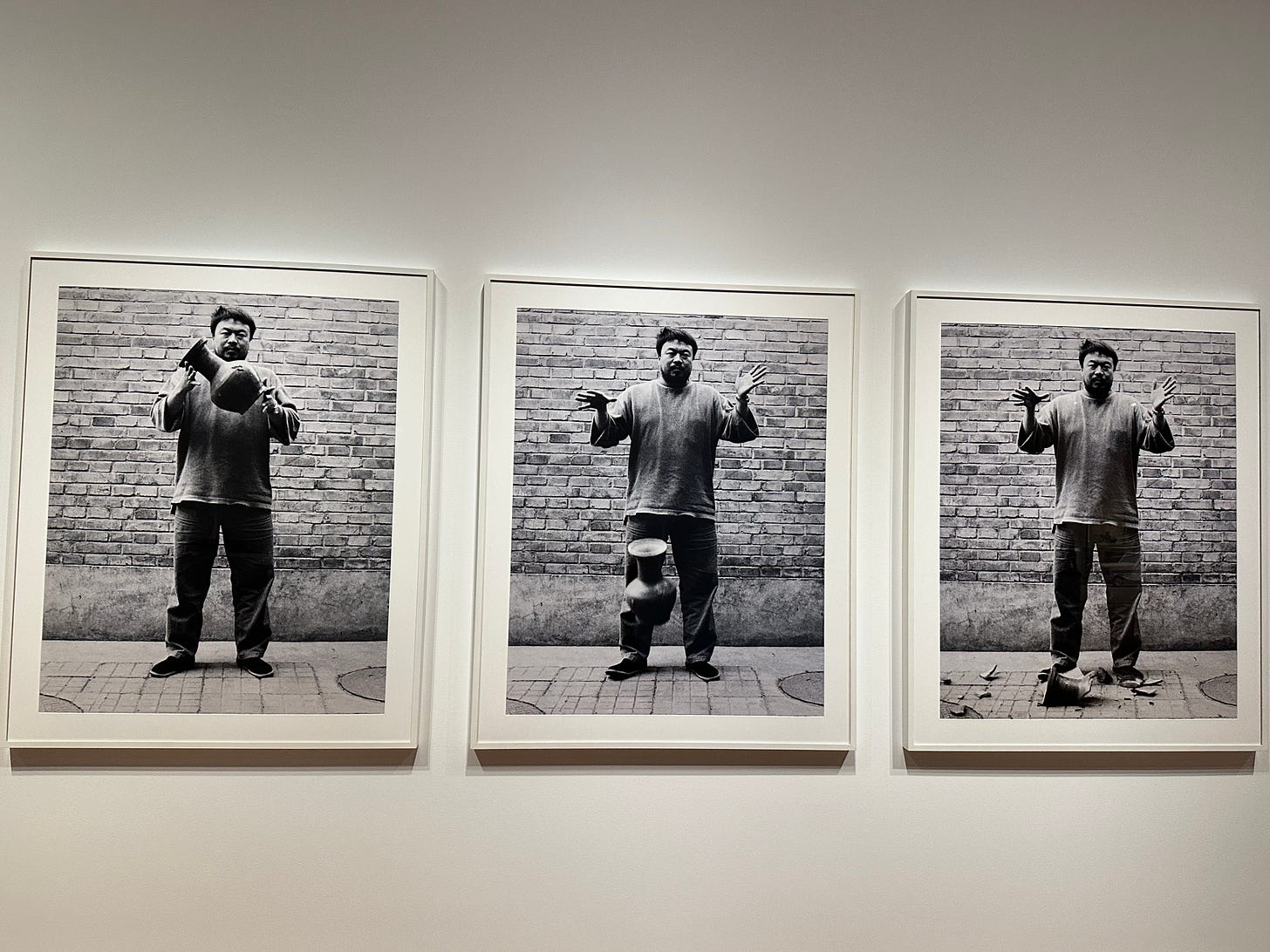
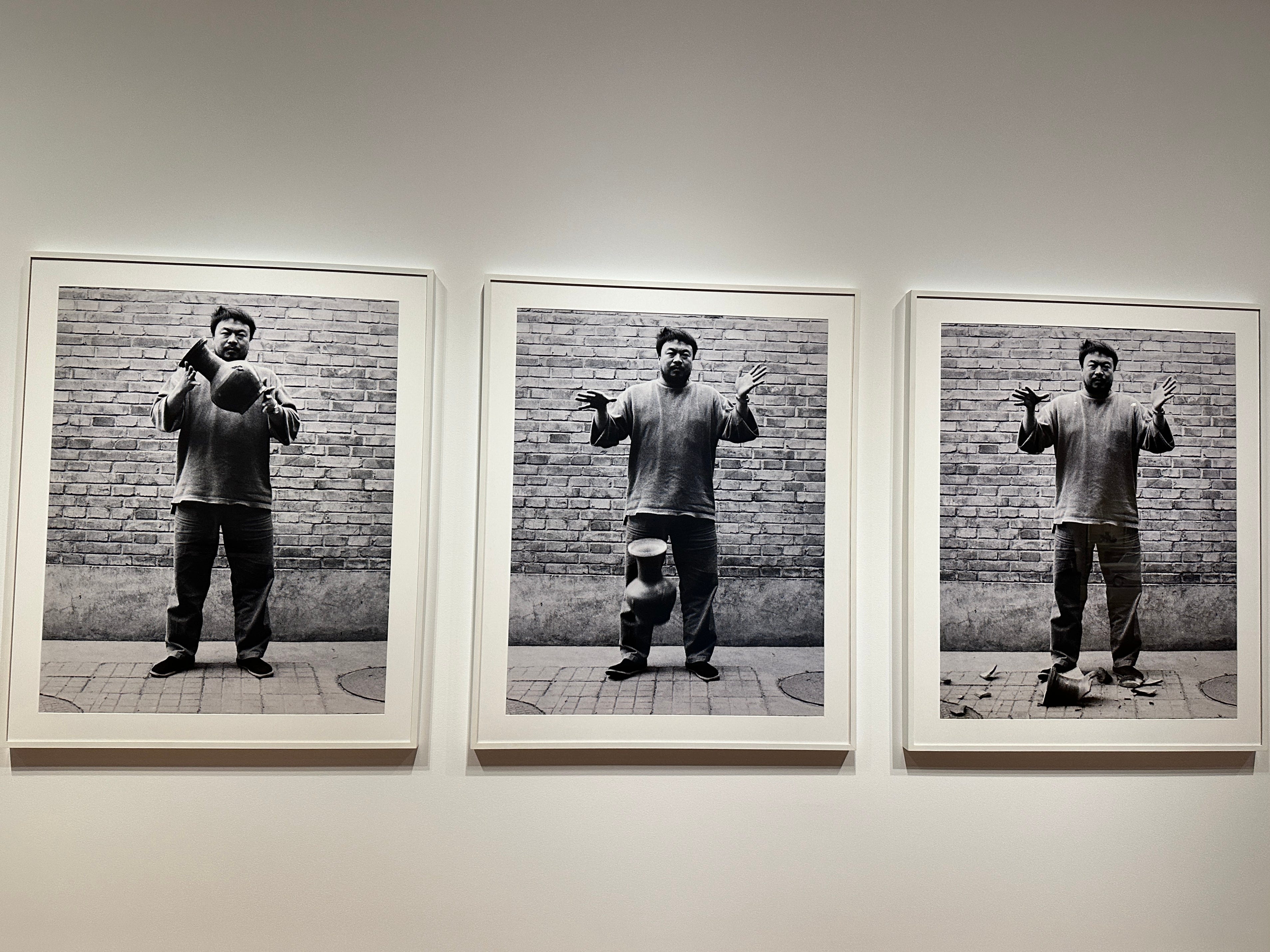
Is a 2,000-year-old Han Dynasty urn still valuable after it’s dropped and shattered?
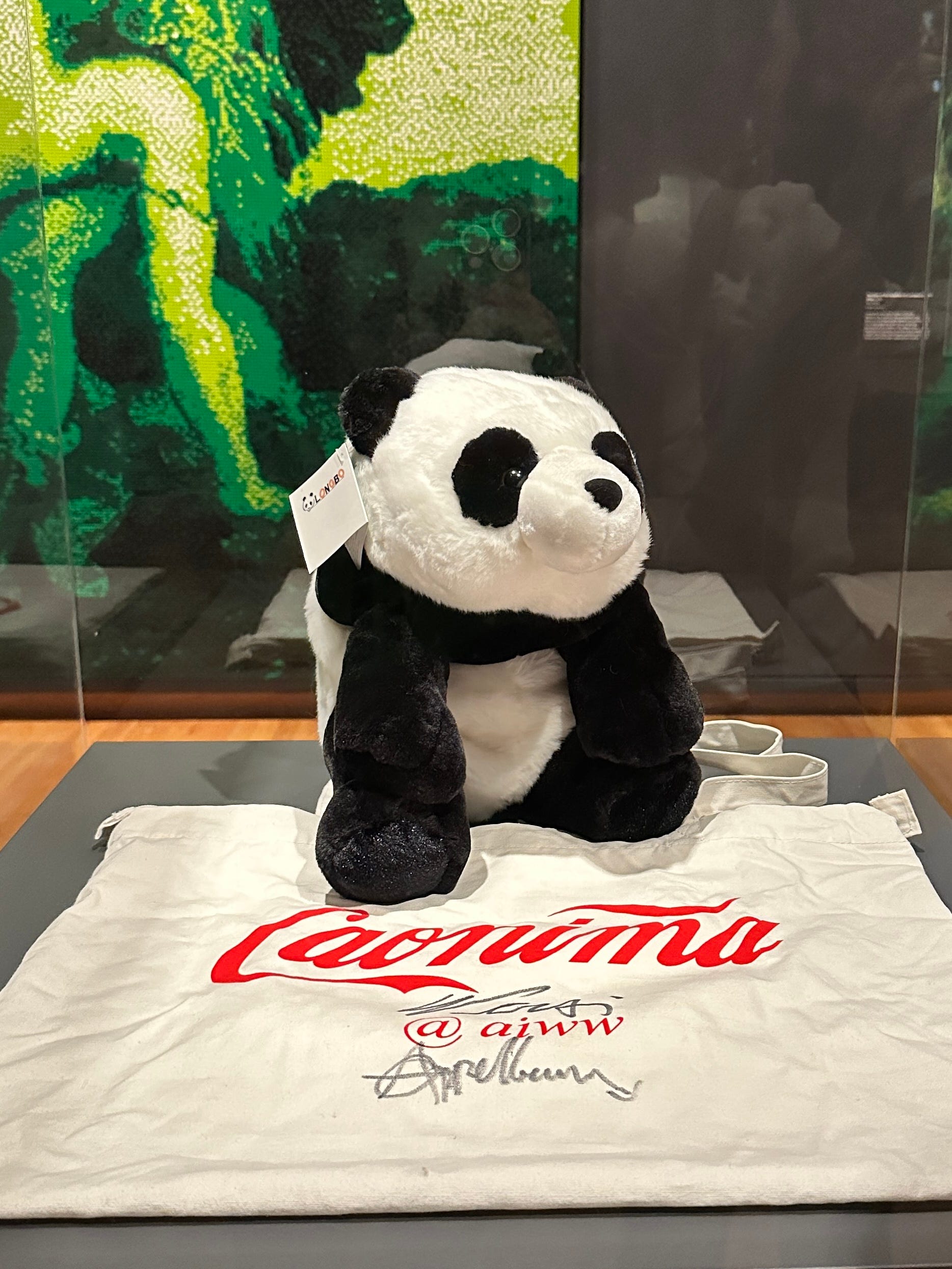
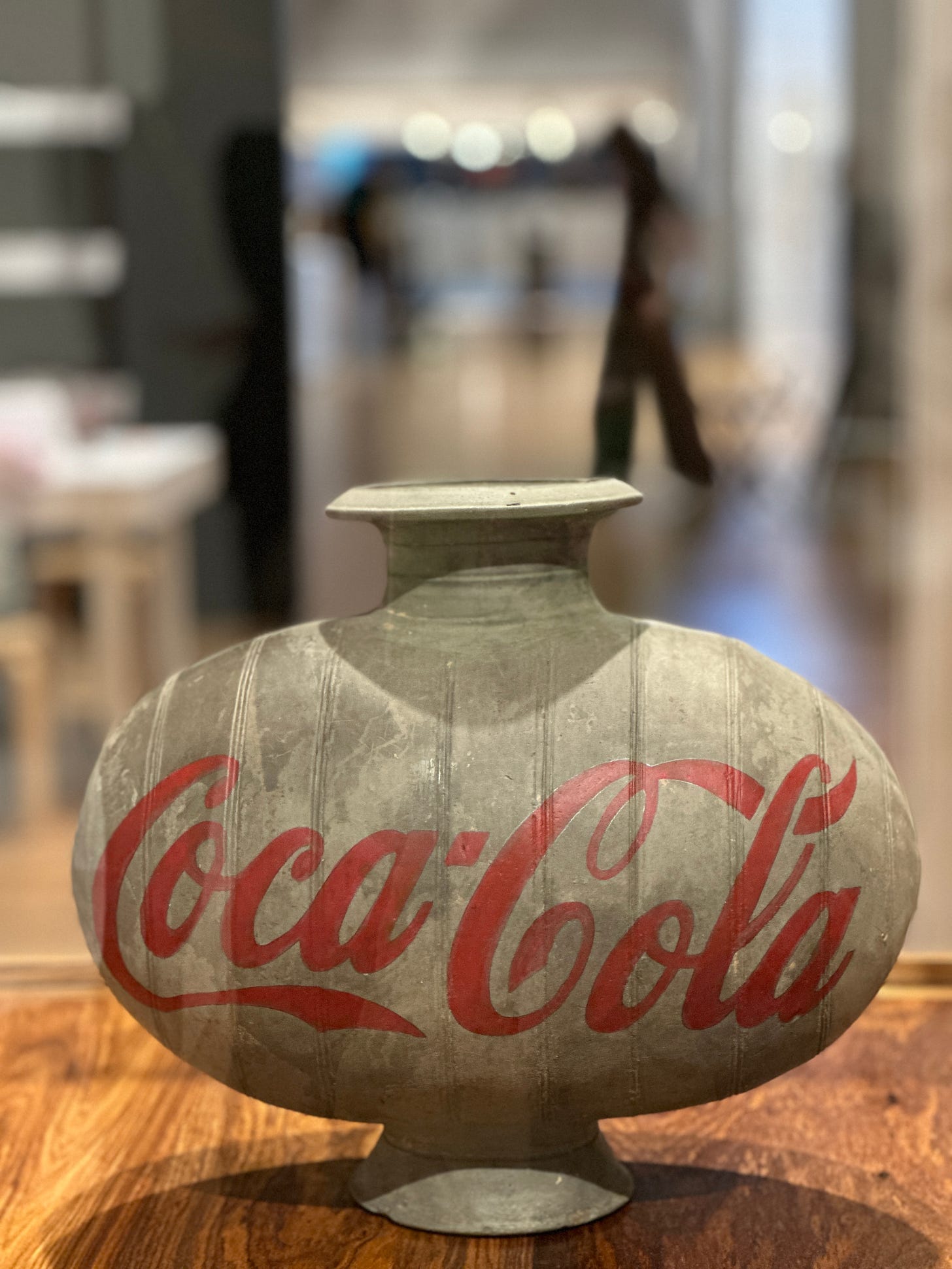
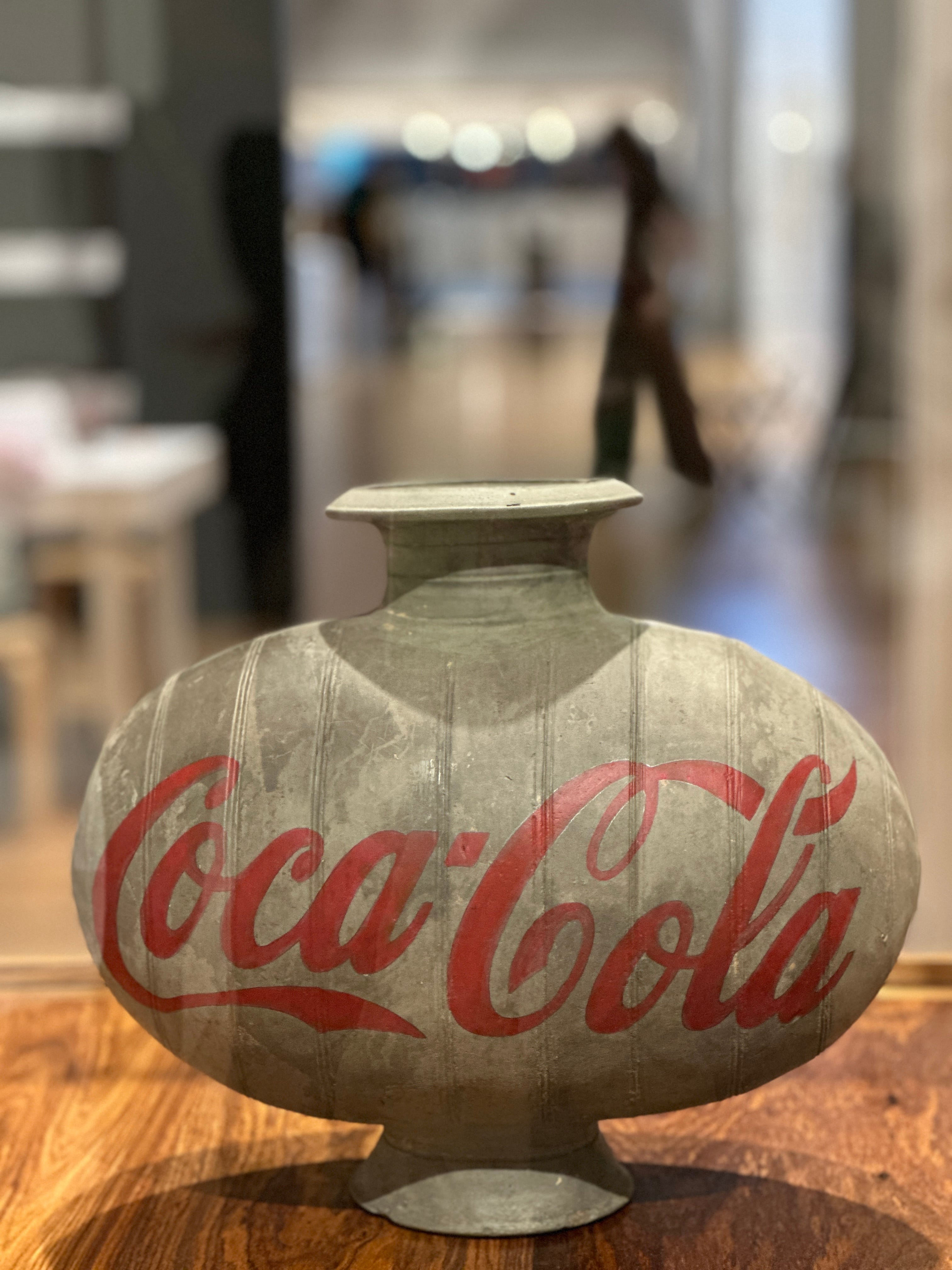
What if it's painted with a Coca-Cola logo?
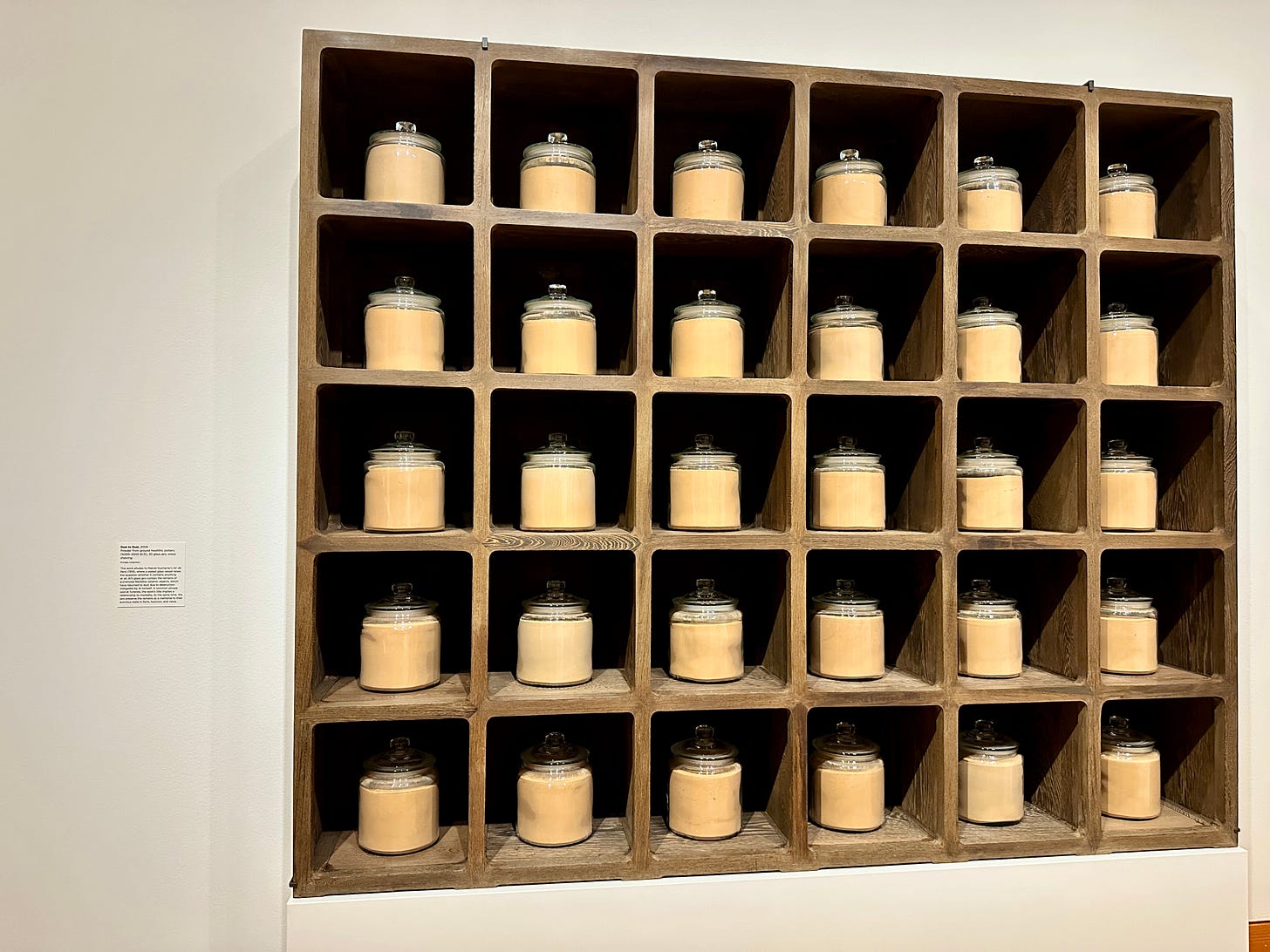
Are ancient artifacts still valuable when they're ground to dust?
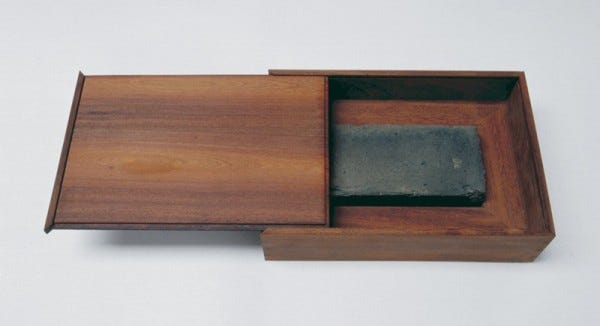
Do bricks from demolished Beijing hutongs become valuable when displayed in an elegant box in a museum?
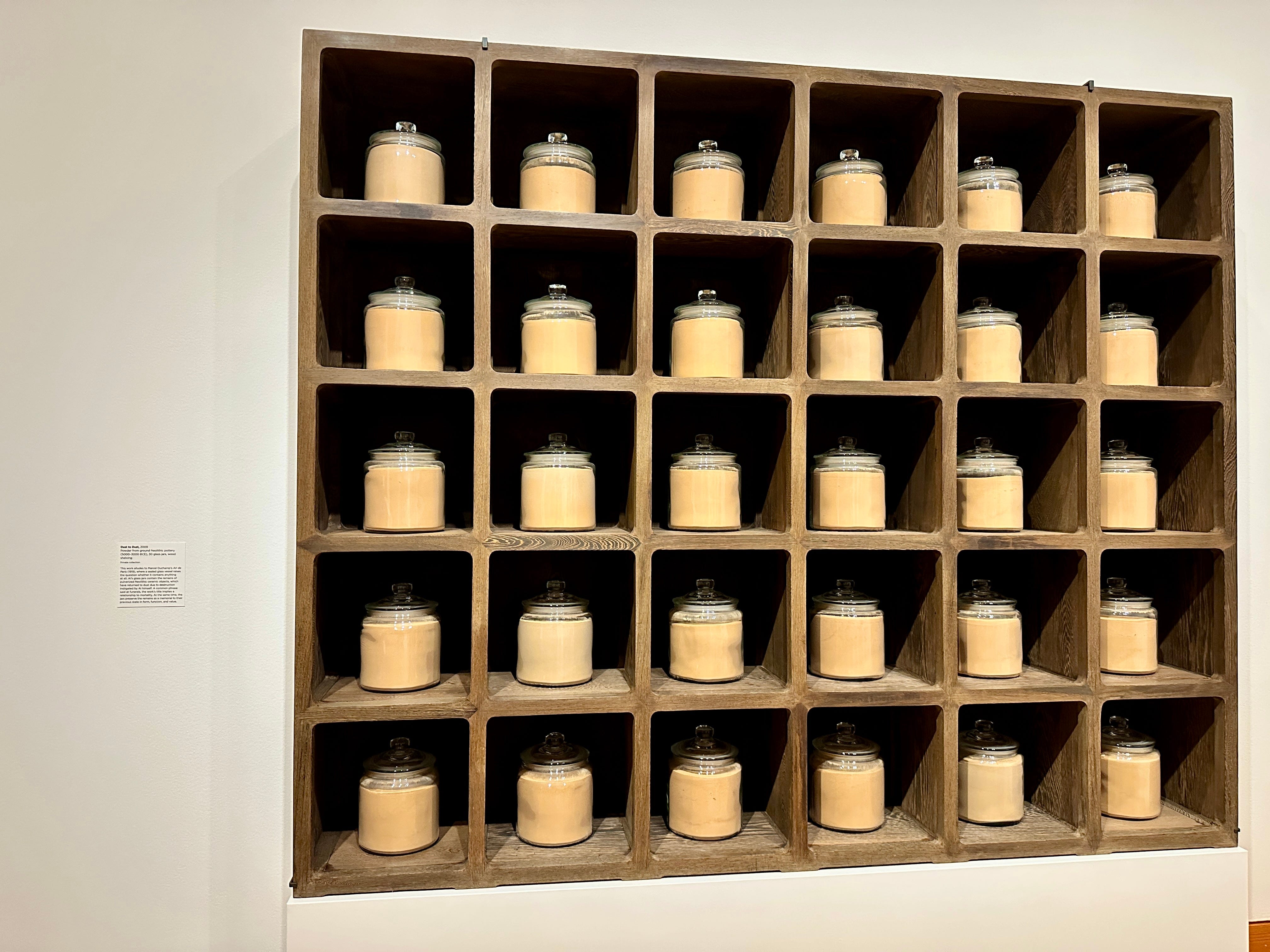
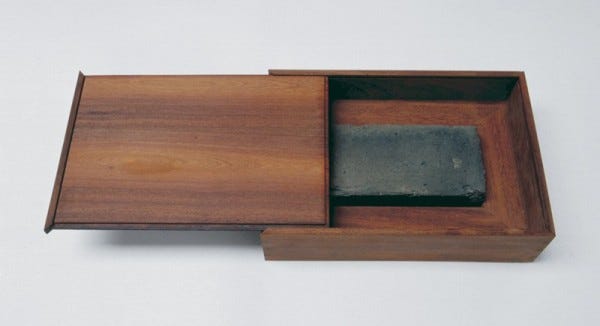
I don’t have answers—just new questions. And that, perhaps, is the point.
Art That Hurts
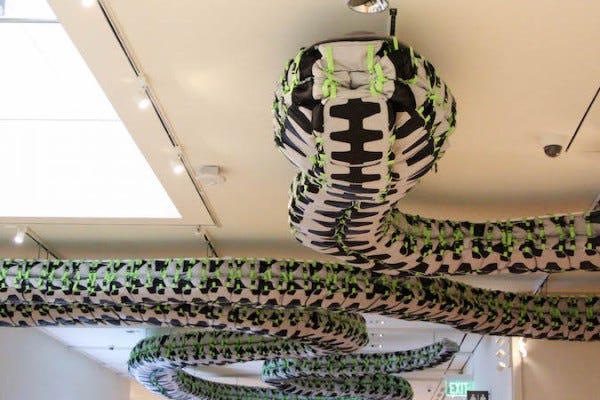
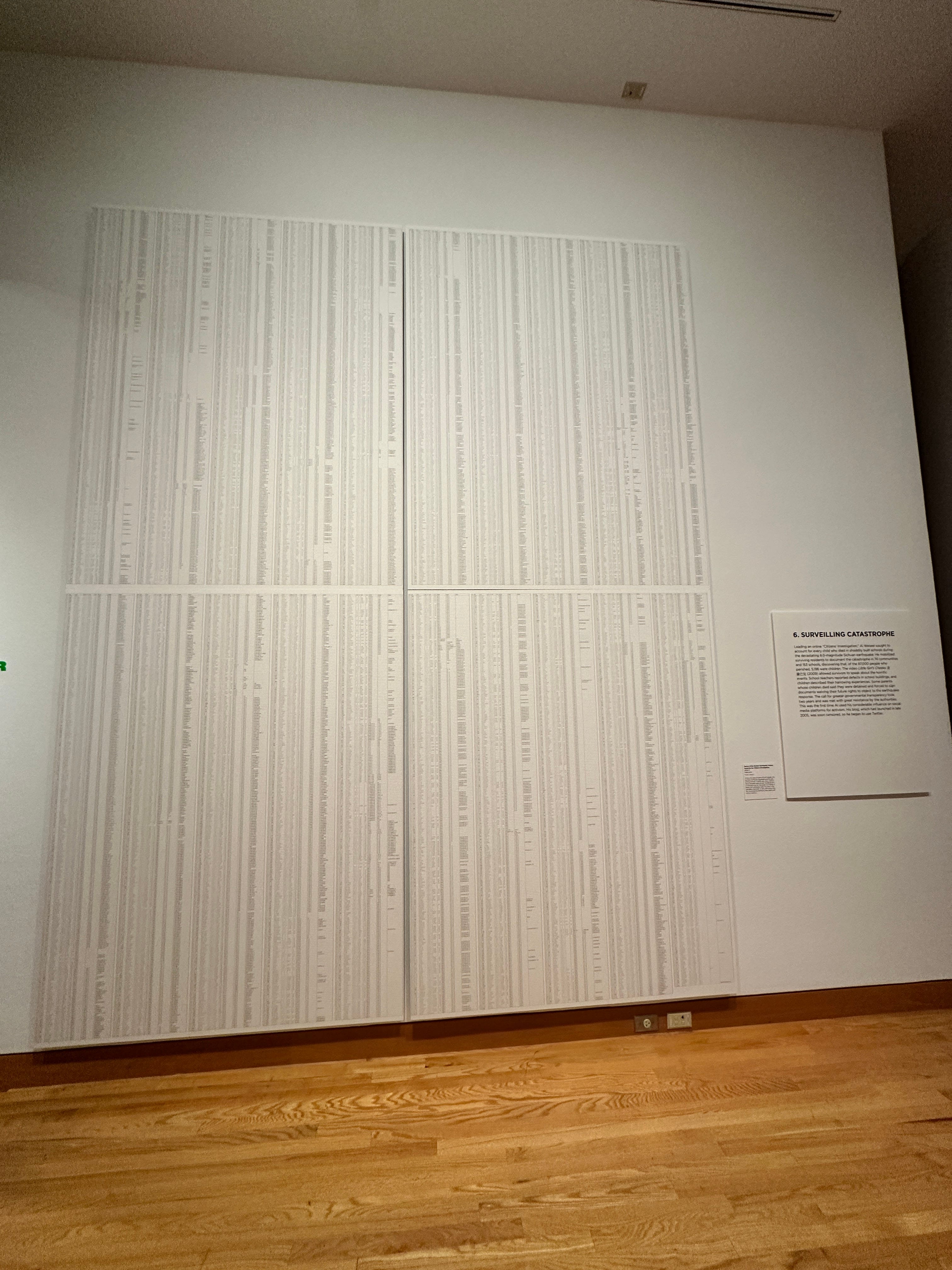
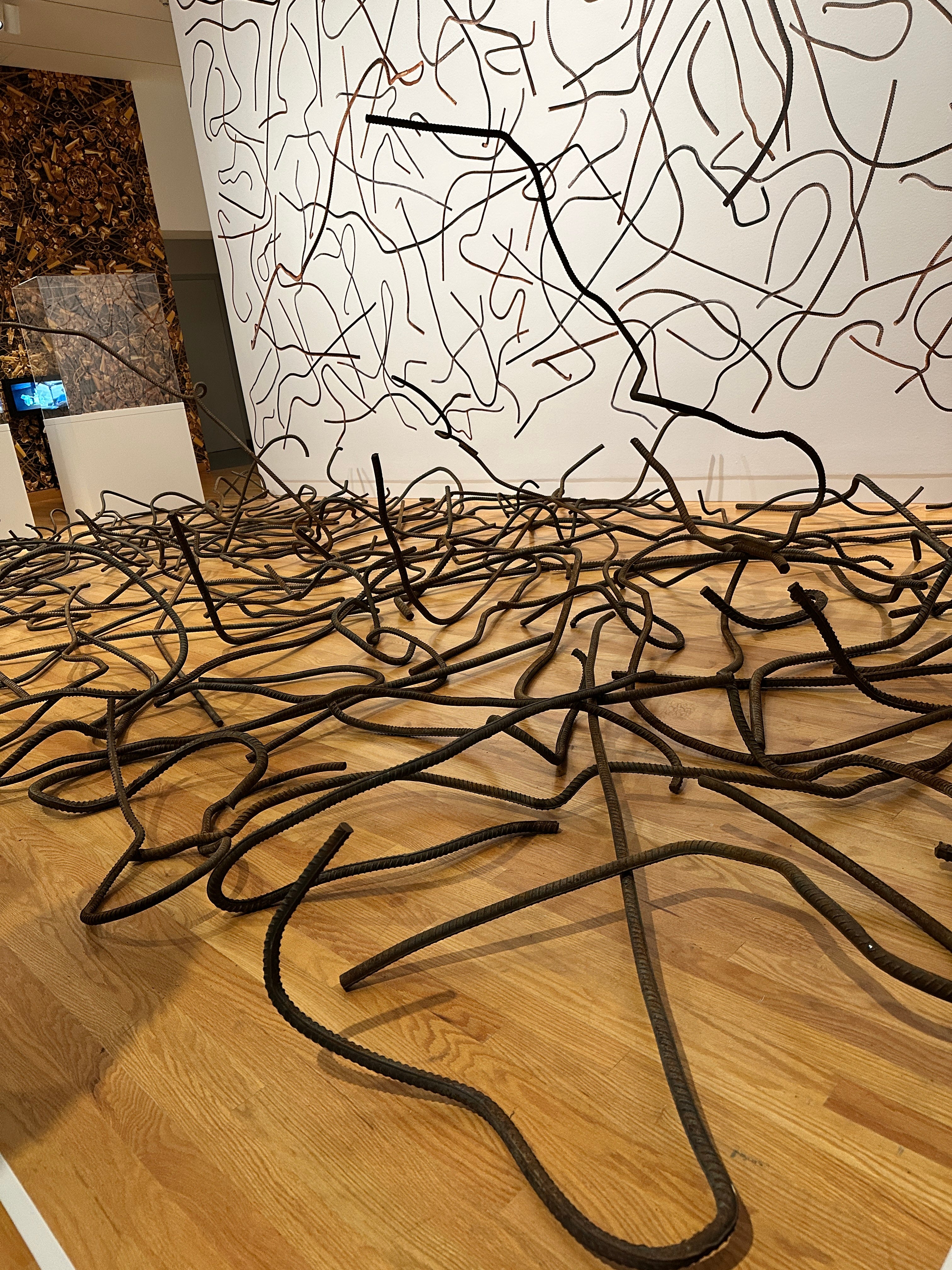
One piece in particular broke my heart: Snake Ceiling. It’s made of hundreds of children’s backpacks and commemorates the thousands of children who died in the 2008 Wenchuan earthquake. Their names and birthdays are printed on a nearby wall—5,219 of them.
Ai Weiwei saw those abandoned school bags in the rubble. Through something as everyday and familiar as a backpack, he brings the tragedy closer, makes it more personal. This is not abstract grief—it’s real, it’s heavy, and it made my heart ache.
What is art?
Ai Weiwei’s art made me doubt myself, feel disturbed, sad, even angry. But also, I felt awakened—by pain, by hope, by love.
“If my art has nothing to do with people’s pain and sorrow, what is ‘art’ for?” — Ai Weiwei
“Creativity is the power to reject the past, to change the status quo, and to seek new potential. Simply put… creativity is the power to act.” — Ai Weiwei
I now understand— art isn’t about beauty. It’s about truth. And sometimes, truth is ugly, painful and uncomfortable. But maybe that’s exactly why we need it.
From Ai to AI
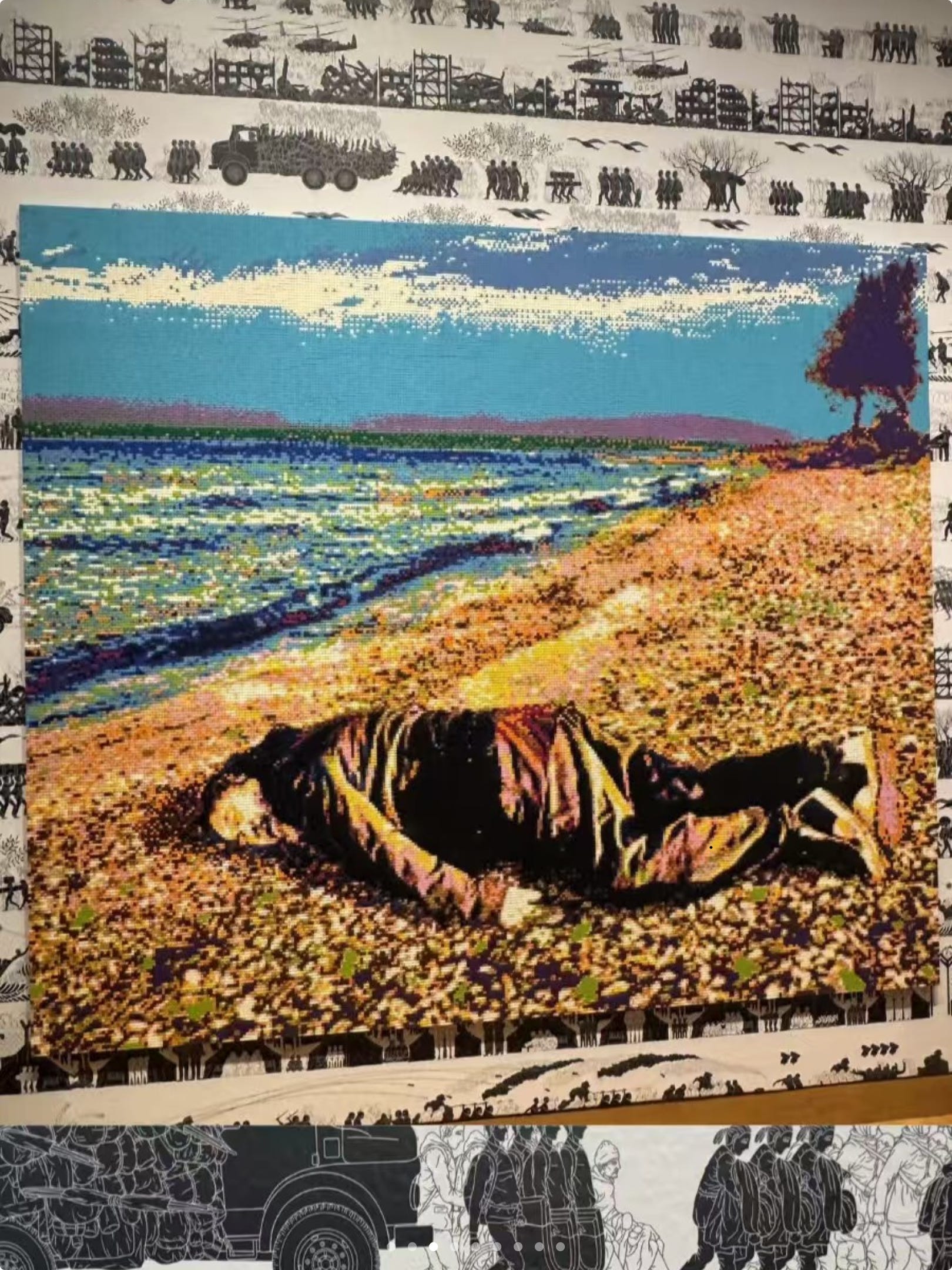
Since 2014, Ai Weiwei has been creating art using LEGO bricks—transforming digital images into physical artworks. Each LEGO block functions like a pixel. What’s fascinating is that Ai doesn’t need to assemble the pieces himself. Once he finishes the digital design, anyone, anywhere, can build the artwork exactly the same way, without his physical presence.
This approach has made me think more about the future—specifically, what role humans will play as AI continues to evolve, possibly reaching or even surpassing human intelligence.
Ai Weiwei’s LEGO art offers a compelling metaphor: the separation of ideation from execution. He focuses on vision and design, while the physical assembly can be replicated by others.
Is this a glimpse into how we might collaborate with AI in the future?
Humans focus on creativity, ideas, and meaning—while AI carries out the execution with precision, speed, and scale. In that world, our value may no longer come from how fast or efficiently we do things, but from our capacity to imagine, to question, to feel.
Design by humans. Built by AI.
不同视角看世界:艾未未艺术展观后感
一直觉得艾未未的艺术丑陋,甚至令人恶心。他夸张的行为让我觉得他是在哗众取宠。他的艺术完全不是我的菜。
三月初,儿子告诉我,美国有史以来最大规模的艾未未个展将于 2025 年 3 月 12 日至 9 月 7 日在西雅图艺术博物馆(SAM)举行。这是SAM 90 年历史上首次在三个馆址同时展出一位艺术家的作品——市中心馆、亚洲艺术博物馆、奥林匹克雕塑公园。
如此兴师动众,自然有他的道理。于是就在昨天,约了几个好友去看看。告诉自己保持开放的心态,虚心学习。结果,远超预期!
谁是艾未未和艾青?
艾未未生于 1957 年。他的父亲是著名诗人艾青(1910–1996)。艾青出生于富裕家庭,却因算命先生说他是“克星”,从小被寄养在贫寒人家。某种意义上,这命是算准了。
1929 年至 1932 年,艾青赴巴黎学画。回国后不久因参加左翼组织被国民党关押三年。出狱后,他加入共产党。但到了 1957 年的“反右运动”,艾青被打成“右派”,被下放到黑龙江和新疆整整16年。
艾未未就在那样的环境下长大, 他的童年忍受羞辱与贫困。1976 年他回到北京学艺术,1981 年赴纽约深造,1993 年回国照顾病重的父亲。他的成长经历对他的艺术追求有深远影响。2015 年他离开中国,如今定居葡萄牙。
叛逆者
艾未未被称为“叛逆者”——一个反对权威、挑战陈规的人。但他的叛逆并非为了制造混乱或造成破坏,而是为了发人深省。他通过艺术,让我们重新审视那些被我们熟视无睹的日常用品,和习以为常的惯性思维。
无用之用
艾未未善于用日常用品创作,他的作品中贯穿着庄子的哲学思想:“无用之为用”。
上周末,我和朋友们喝茶,其中一位带来几条精美的西阵织。她说这些西阵织花了几百美元。我问她:“你平时会用吗?”她回答:“不会,只是偶尔拿出来看看。” 我没作声,另一位朋友说出了我的心里话:“花这么多钱,不用不是浪费了吗?” 是的,我一向追求实用、高效、学习和成长, 并往往以此来衡量“有用”。
艾未未将老旧的中式木凳、永久牌自行车等材料组合起来创作雕塑,这些物品失去了原本的用途——凳子无法再坐,自行车也无法再骑。但通过他新重组和创作,这些老旧的日常用品获得了新生。我开始反思:“什么是有用?什么是浪费?”
关于正宗与仿制
艾未未的《十二生肖兽首》挑战了我对“正宗”的理解。原作是清朝圆明园喷泉的一部分,如今中国将其视为国宝, 其实却是由欧洲传教士设计、法国人铸造。
艾未未重塑了整个系列,既致敬原作,也质疑“原作”到底意味着什么。所谓“正宗”意味着历史悠久?还是原创?还是我们的记忆?
这让我想起最近带儿子回国旅行时的一幕。他喜欢吃生煎包,我们在上海尝了小杨生煎、在苏州吃了傻子生煎。我一边吃一边说:“这才是正宗的!”他抬头问我:“什么叫正宗?”我一时语塞,答不上来。正宗的定义是什么?正宗又有什么意义? 对他来说,中国的,美国的,甚至我自己在家做的,只要好吃,就足以。也许,“正宗”只是我们给自己画的大饼。
重新思考“价值”
艾未未的艺术让我开始反思:如何定义“价值”?
一只两千年前的汉代陶罐,摔碎后,还值钱吗?
如果上面画上了可口可乐的标志,它还算是珍贵文物吗?
如果古代器物被碾成尘土,它还有意义吗?
被拆除的北京胡同的砖头,放进博物馆精致的展盒中,它们就变得有价值了吗?
我只有疑问,没有答案。而这,也许正是艺术的力量。
令人心痛的艺术
有一件作品深深刺痛了我——《蛇形顶棚》。它由数百个儿童书包组成,用以纪念在 2008 年汶川地震中丧生的孩子们。旁边的墙上,印着 5219 个孩子的名字与出生日期。
艾未未在废墟中看到遍地的书包。通过书包,这个我们熟悉的日常用品,他把灾难拉近,让我感到切实的心痛 - 真实的、沉重的。
什么是艺术?
艾未未的作品让我质疑自己,让我感到不适、悲伤,甚至愤怒。但与此同时,我被唤醒——因为痛苦,也因为希望和爱。
“如果我的艺术不能唤起人们的痛苦和悲伤,那它的意义何在?” —— 艾未未
“创造力,是拒绝过去、改变现状、探索潜能的力量。简单来说……创造力就是行动的动力。” —— 艾未未
艺术不一定是美的,但它一定是“真实”的。而真实,有时是丑陋的,令人悲哀,痛苦,不安。但也许,正因如此,我们才更需要艺术。
从艾未未想到未来AI世界
自 2014 年起,艾未未开始用乐高积木创作艺术,将数字图像转化为实体作品。每一块乐高积木就像一个像素。他只需要完成数字设计,其他人无论身在何处,都可以按照设计一模一样地拼装出作品,甚至无需他亲手参与。
最近一直在思考一个问题:当AI发展到接近或超越人类智慧的那一天,人类还能做什么?
艾未未用乐高创作的过程,展示了一种可能的未来模式:将“构思/设计”与“执行/实现”这两个阶段分开。他专注于思想和视觉表达,而具体的制作过程可以由别人来完成。
或许,这正是未来我们与AI的合作模式:人类负责创意、构思,AI负责实现、执行。在未来的AI世界里,人类的价值将不再体现在效率或速度上,而在于我们想象的能力、质疑的精神,以及感受的深度。
人类构思,AI建造!